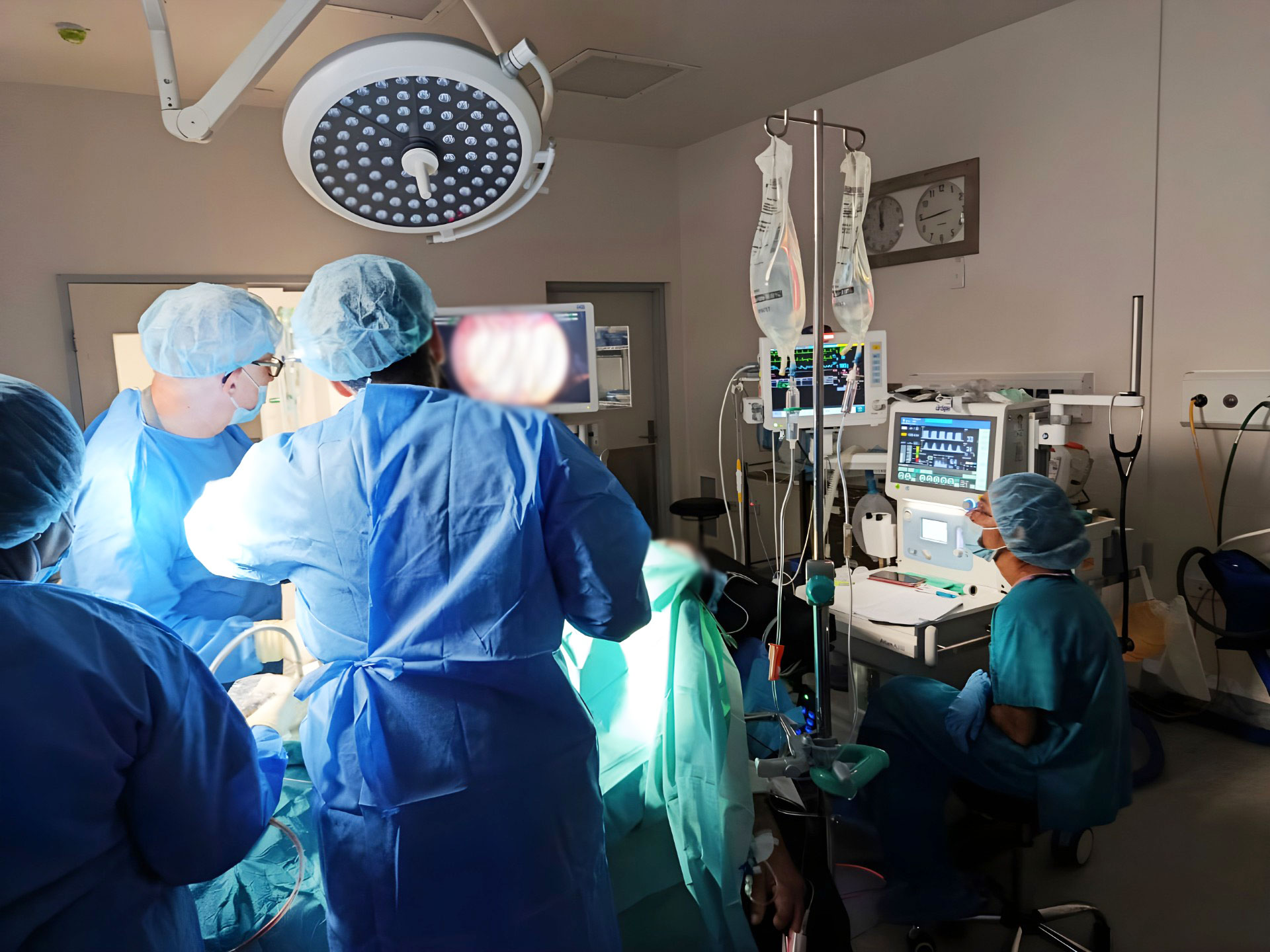
We are pleased to share that Naoero Medical Centre now performs laparoscopic (minimally invasive) surgeries as a regular part of our surgical services. This is a significant milestone in the continued advancement of healthcare in Naoero. Previously, patients requiring certain surgical procedures often faced the prospect of conventional open surgery or overseas medical referrals. The introduction of laparoscopic surgery now allows more patients to receive advanced treatment locally. This would reduce the stress, disruption, and logistical challenges associated with travelling abroad for care.
For patients, this advancement means smaller incisions, less postoperative pain, faster recovery, and the ability to recover closer to home and family support systems.
What is Laparoscopic Surgery
Often referred to as “keyhole surgery,” laparoscopic surgery uses a high-definition camera and specialised instruments inserted through very small incisions. This enables the doctors to perform surgeries with precision while minimising trauma to surrounding tissue.
Advanced laparoscopic abscess drainage with cholecystectomy
Additionally, For the first time Naoero Medical Centre has also successfully performed advanced laparoscopic abscess drainage combined with simultaneous cholecystectomy locally. This is a highly advanced minimally invasive procedure used to manage severe and complicated gallbladder infections, where both the infected abscess and the diseased gallbladder are treated during the same operation.
Why This Achievement Matters for Naoero
Successfully performing these procedures within Naoero represents a major advancement in local surgical capability. These complex cases require advanced laparoscopic expertise, careful intraoperative decision-making, specialised equipment, and coordinated perioperative care. The ability to now manage such conditions locally reflects the growing strength and maturity of Naoero’s healthcare services and reduces the need for overseas referral for complex surgical management.
This milestone is not only about introducing new surgical techniques, it is about improving access to care and strengthening local clinical capability in Naoero.